
Prelude No.2 Urtext Performance Practice Edition & Harmonic Study Guide
Harmonic profile, chord progression analysis, and rehearsal guide for Prelude No.2 by Hans Jacobi in G Major (4/4, 123 BPM). Repertoire facts and pedagogical performance guide.
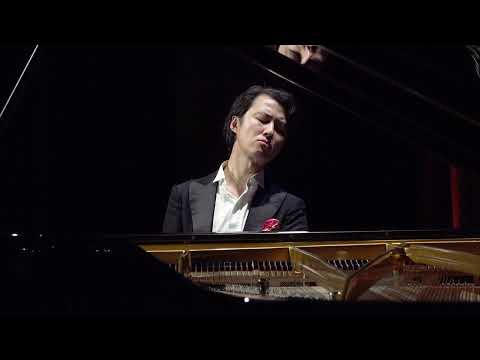
Video Masterclass & Acoustic Performance
Acoustic Piano Video Masterclass • Tempo & Fingering Demo
Chords & Harmony
Piano • GuitarPerformance & Study Notes
Harmonic structure, tempo guidance, and rehearsal notes for Prelude No.2
Tonal Center & Harmonic Movement
The piece operates in G Major, governed by a signature with a single sharp (F♯). This tonal center positions G as the primary acoustic anchor, while E Minor and the dominant D Major supply contrasting tonal colors. Harmonically, the progression G → Am → F → Dm → G7 pauses expressively on an open half-cadence, leaving harmonic expectation unresolved. In terms of hand topography, G Major yields a buoyant diatonic space where the elevated leading note F♯ gives melodic phrases an instinctive upward surge.
Musicological Overview & Archival Index
From Hans Jacobi's catalog, Prelude No.2 remains an essential contribution to the contemporary classical piano repertory. Comprising 49 bars across a 2-page layout, the musical text stems from accurate modern sheet transcriptions. International bibliographic tracking links the piece to reference `mbid-931789f6-pianistforum` and ISWC `T-931.789.F6-1`.
Technical Study & Keyboard Pedagogy
Benchmarked against Easy syllabus standards (early-grades syllabus (ABRSM Grade 2 standard)), the work develops refined tonal control. Key hurdles center on balancing quiet accompaniment figures beneath a clearly audible melodic statement. Supporting figures featuring broken classical triad figures and balanced inner dialogue need relaxed wrist cushioning. Pedal coordination: use light, shallow pedaling to enhance acoustic warmth without muddling inner voices. Recommended Exercise: rehearse hands individually with a metronome at slow speeds before coordinating hands together.
Metric Pulse, Tempo & Subdivision
The temporal design is written in 4/4 (simple quadruple meter), establishing an authoritative quadruple framework where downbeat accents anchor the overarching phrase architecture. The indicated tempo mark of ♩ = 123 BPM (*Tempo di marcia*) suggests an atmosphere that is spirited with crisp finger articulation. Interpretively, channel energy through the middle beats toward subsequent downbeats to preserve continuous phrasing arcs.
Practical Repertoire & Transposition Options
Curatorial Repertoire Role: The work serves as a reliable selection for formal piano masterclasses, recital auditions, and degree juries.
Tessitura & Key Transposition: For performers transposing away from G Major, optimal vocal targets include F Major for medium-low voices and A Major for upper registers. B♭ transposing instruments sound in concert pitch when reading the score in A Major.
Licensing Information: Prepared as a reference study edition under `unknown` standards for non-commercial pedagogical exploration.
Repertoire Matrix & Anthologies
Harmonically compatible pieces, graded level progression, and curated songbook collections.
Classical Masters Conservatory Piano Anthology
Download 300+ free classical piano sheet music PDFs in authoritative Master editions. Chopin Nocturnes, Beethoven Sonatas, Bach Inventions, Mozart,...
Peaceful & Relaxing Piano Solos (Study, Focus & Mindfulness)
Download peaceful, relaxing piano sheet music PDFs. Featuring River Flows in You by Yiruma, Ludovico Einaudi, Yann Tiersen, Satie Gymnopedie, Debussy, and...
Romantic Frederic Chopin Piano Repertoire
Download free Master Frédéric Chopin piano sheet music PDFs. Authoritative scores for Nocturnes Op. 9 No. 2, Minute Waltz, Raindrop Prelude,...
Frequently Asked Questions (FAQs)
01. Where can I download Prelude No.2 sheet music for free?
You can download the complete 2-page printable A4 vector PDF of Prelude No.2 for free directly on Pianist Forum with no subscription required.
02. What key, meter and tempo is Prelude No.2 composed in?
Prelude No.2 by Hans Jacobi is composed in the key of G Major, set to 4/4 time signature, with an authentic performance tempo of 123 BPM.
03. What is the piano difficulty level of Prelude No.2?
This arrangement is rated at an Easy level, featuring authentic harmony across approximately 49 measures.
04. Does this arrangement include complete harmonic chords?
Yes. This arrangement provides comprehensive harmonic chord symbols and standard musical notation. It is fully adaptable for solo piano performance, guitar accompaniment, organ, and instrumental ensembles.
Classical Quick Picks
View All →Recommended Repertoire: Hans Jacobi & Classical
Free printable piano sheet music curated from Hans Jacobi and similar Classical compositions.

Leviathan
Hans Jacobi

Prelude No.3
Hans Jacobi

Prelude No.4
Hans Jacobi

Sonata for a Vernissage no.1
Hans Jacobi
| # | Composition • Composer | Action |
|---|---|---|
| 1 |
Leviathan
Hans Jacobi • Same Artist
|
Score → |
| 2 |
Prelude No.3
Hans Jacobi • Same Artist
|
Score → |
| 3 |
Prelude No.4
Hans Jacobi • Same Artist
|
Score → |
| 4 |
Sonata for a Vernissage no.1
Hans Jacobi • Same Artist
|
Score → |
| 5 |
Prelude No.2 in A Minor, Op.332 Toccata
Curbeau
|
Score → |
| 6 |
Prelude No.21 in B flat major, Op.1
Various Artists
|
Score → |
| 7 |
Prelude No.25 Op.5 Duet
Various Artists
|
Score → |
| 8 |
prelude no.3
Cofvey Fieldmeo
|
Score → |
| 9 |
Prelude No.3
Isaias.exe
|
Score → |
| 10 |
Prelude No.4
J.H. Spencer
|
Score → |